
Let’s be honest, black holes sound like something straight out of science fiction. They don’t emit light, they warp time itself, and they have a nasty habit of swallowing everything that gets too close. But here’s the thing: black holes are real, and they’re not magical vacuum cleaners in space. They’re actually the natural endpoint for some of the most massive stars in the universe. So, how black holes work comes down to gravity, gravity so intense that not even light can escape its grip. Imagine taking our Sun and crushing it into a sphere just a few miles wide. Seems impossible, right? Yet that’s exactly what happens when a giant star dies. What you’re left with is an object so dense that it punches a literal hole in the fabric of space-time.
Let’s be honest. Black holes sound like science fiction. They don’t shine. They warp time. And they eat everything that gets too close. But they’re not magical vacuums in space. They’re real. And they’re actually pretty simple once you break them down.
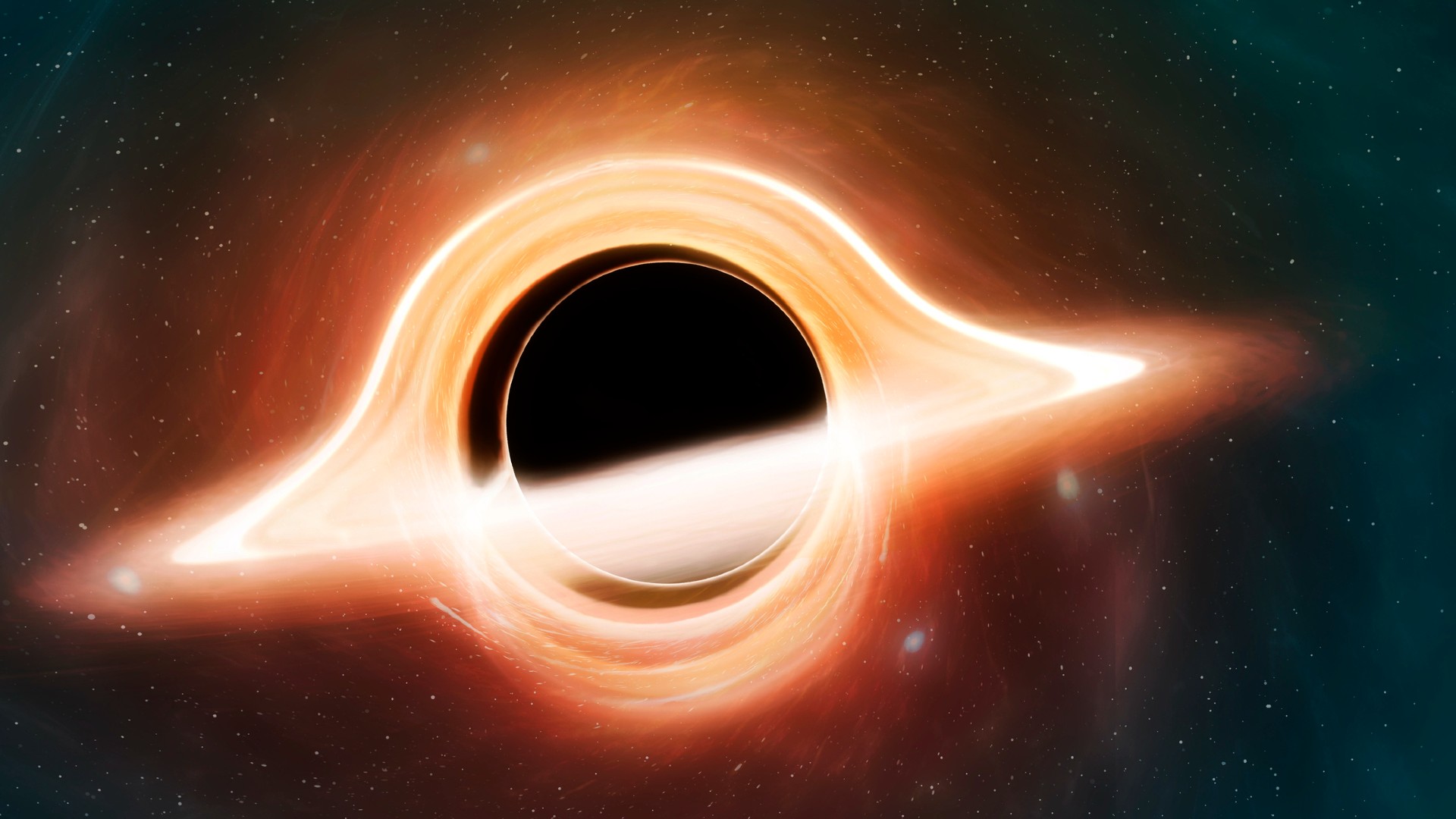
Here’s the core idea. A black hole is gravity gone wild. So wild that not even light can escape. Imagine crushing our Sun into a sphere just a few miles wide. That’s the kind of density we’re talking about. That’s how black holes work.
The Two Main Parts You Need to Know
Every black hole has two key parts. First is the event horizon. Think of it as the point of no return. It’s a invisible bubble around the black hole. Once you cross it, you can never leave. Not even if you had a magic spaceship.
Second is the singularity. That’s the heart of the beast. All the dead star’s mass gets crushed into a single point. A point with zero size. Physics breaks down here. Honestly? Even Einstein got confused.
What Happens If You Fall In?
This is where things get weird. And a little funny. Scientists call it spaghettification. Yes, really.
Imagine falling feet first. The gravity pulling your feet is way stronger than the gravity pulling your head. So your body stretches. And stretches. Until you become a long, thin stream of atoms. Like a noodle.
It sounds scary. But here’s the twist. If you fall into a supermassive black hole, you might not feel much at all. The pull is gentler. So you could cross the event horizon without even noticing.
Not All Black Holes Are the Same
There are several types of black holes. The most common are stellar black holes. They form when a giant star dies and collapses. These are usually 5 to 30 times heavier than our Sun.
Then you have supermassive black holes. These are monsters. Billions of times heavier than the Sun. Every large galaxy has one at its center, including our Milky Way.
Scientists also think tiny ones might exist. They’d be from the Big Bang. But we haven’t found them yet.
Time Gets Strange Near a Black Hole
Here’s a mind-bender. Near a black hole, time slows down. If your friend watched you fall in, you’d appear to freeze at the edge. You’d look red and still. Forever.
But from your view? You’d fall right in. No drama. No freeze frame. That’s relativity for you. Einstein figured this out over 100 years ago.
Do Black Holes Last Forever?
You’d think nothing escapes a black hole. And you’d be mostly right. But Stephen Hawking found a loophole. It’s called Hawking radiation.
Tiny particles can slowly leak away from a black hole. Over trillions of years, the black hole shrinks. Eventually, it vanishes in a small flash of energy. So even these cosmic giants aren’t eternal.
Why Should You Care?
Black holes are nature’s extreme labs. Every time scientists detect gravitational waves or snap a photo of a black hole’s shadow, we learn something new. They test the limits of reality.
Some researchers even think black holes could be doors to other universes. Or giant hard drives storing information. We don’t know yet. And that’s the fun part.
So next time you look up at night, remember this. Somewhere out there, a invisible giant is bending light and slowing time. And quietly reminding us how strange and beautiful the universe really is.