Imagine for a second that a major city needs to build a new bridge, or a massive tech company wants to construct a state-of-the-art research facility. They need millions sometimes billions of dollars to pull it off. They could head to a traditional bank for a loan, but that is rarely the cheapest or most flexible option.
So, what do they do instead? They turn directly to everyday investors like you.
This is the foundation of the bond market. If you have ever wondered how fixed-income assets work, how they generate returns, and why they behave the way they do, here is a complete walkthrough.
What Exactly Is a Bond?
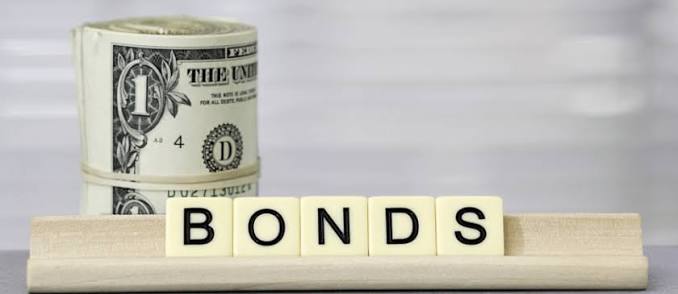
At its core, a bond is simply a formal loan agreement between a borrower and a lender.
When you purchase a bond issued by a government or a corporation, you are assuming the role of the lender. In exchange for your upfront cash, the borrowing entity makes a contractual promise: they will pay you regular interest payments over a set period, and once that timeframe expires, they will return your original investment in full.
[Investor] –(Initial Cash)—> [Issuer (Gov / Corp)]
[Investor] <—(Regular Coupons)– [Issuer]
[Investor] <—(Principal at Maturity)– [Issuer]
Because these securities pay out predictable income on a fixed schedule, financial professionals classify them as fixed-income instruments.
Anatomy of a Bond: 5 Essential Terms
To navigate the market effectively, you need to know the core terms that define a bond’s value and schedule.
- Par Value (Face Value): This is the baseline dollar amount the bond will be worth when it reaches the end of its term. It is also the figure used to calculate your regular payouts.
- Coupon Rate: Expressed as a percentage, this is the annual interest rate the issuer agrees to pay based on the par value.
- Coupon Dates: The specific calendar dates throughout the year when the issuer sends out interest checks (often semi-annually or annually).
- Maturity Date: The final deadline when the loan agreement officially ends and the issuer must return the full par value to the holder.
- Issue Price: The price tag attached to the bond when it is first minted and sold to the public.
The 4 Primary Categories of Bonds
Not all fixed-income assets carry the same level of risk or taxation. Most offerings on modern brokerage platforms fall into four distinct buckets:
1. Government Bonds
In the United States, these are known collectively as Treasuries. Depending on their lifespan, they are split into Bills (maturing in a year or less), Notes (lasting 1 to 10 years), and Bonds (spanning more than 10 years). Because they are backed by the full faith and credit of the federal government, they are generally viewed as the safest bond investments available.
2. Municipal Bonds
Often called “munis,” these are issued by local towns, cities, and states to fund public works like highways, schools, and water systems. A major draw for investors is that the interest earned from municipal bonds is frequently exempt from federal (and sometimes state) income taxes.
3. Corporate Bonds
When businesses want to buy equipment, expand into international markets, or fund research without diluting their stock equity, they issue corporate debt. These usually carry higher interest rates than government bonds to compensate for the higher risk of a company running into financial trouble.
4. Agency Bonds
These instruments are backed by government-affiliated enterprises or federal agencies such as Fannie Mae or Freddie Mac specifically designed to support housing and public development projects.
The Inverse Relationship: Why Bond Prices Fluctuate
Here is a detail that trips up many beginners: when prevailing interest rates rise, existing bond prices fall and when interest rates drop, bond prices go up.
Interest Rates RISE ▲ ===> Bond Prices FALL ▼
Interest Rates DROP ▼ ===> Bond Prices RISE ▲
To see why this happens, think of it from a buyer’s perspective in the secondary market:
- Imagine you buy a brand-new $1,000 bond that pays a 10% coupon ($100 per year).
- Sometime later, central bank interest rates plunge, and newly issued bonds only offer a 5% coupon ($50 per year).
- Suddenly, your older bond paying $100 annually is far more attractive than anything newly created. Buyers will gladly pay a premium above $1,000 to buy your high-yielding asset.
- Conversely, if market rates surge to 15%, nobody will buy your 10% bond for full price. You would have to offer it at a discount below $1,000 so the overall yield matches current market conditions.
Specialized Bond Structures
Standard bonds pay a fixed interest check every few months, but Wall Street has engineered several unique variations:
- Zero-Coupon Bonds: These skip periodic interest payouts entirely. Instead, they are sold at a deep discount upfront (e.g., buying a $1,000 bond for $800) and pay out the full face value at maturity.
- Convertible Bonds: These debt securities give holders the choice to swap their bond for a set number of company stock shares under specific conditions.
- Callable Bonds: These give the issuer the right to buy back (“call”) the debt before its maturity date. Companies typically do this when interest rates drop so they can refinance at cheaper rates.
- Puttable Bonds: These give the investor the right to sell the bond back to the issuing entity prior to maturity, offering protection if interest rates spike or credit quality drops.
Measuring Risk: Credit Ratings and Duration
Before adding fixed income to your portfolio, pay attention to two critical metrics:
Credit Quality
Independent rating institutions like Standard & Poor’s, Moody’s, and Fitch evaluate the financial health of issuers. Top-rated issuers earn an Investment Grade seal, signaling a very low probability of default. Lower-rated, riskier companies issue High-Yield (or “Junk”) Bonds, which must offer significantly higher coupon rates to convince investors to take on the additional risk.
Duration
While “maturity” measures the time remaining until a loan ends, duration measures how sensitive a bond’s price is to a 1% shift in prevailing interest rates. The longer a bond’s lifespan and the lower its coupon rate, the higher its duration meaning its price will swing more dramatically when market interest rates fluctuate.
How to Add Bonds to Your Portfolio
Getting exposure to fixed-income assets is straightforward:
- Direct Purchases: You can buy corporate and municipal bonds through standard online brokerage accounts. U.S. government debt can be bought commission-free directly through the government’s official TreasuryDirect platform.
- Funds and ETFs: If you prefer instant diversification across hundreds of issuers, you can buy shares in fixed-income mutual funds or bond Exchange-Traded Funds (ETFs).
Adding a slice of fixed income to your asset allocation can help cushion your portfolio against stock market volatility while providing a steady stream of predictable income over time.